
Villa 27, Al Raddi St., Umm Suqeim 1, Dubai

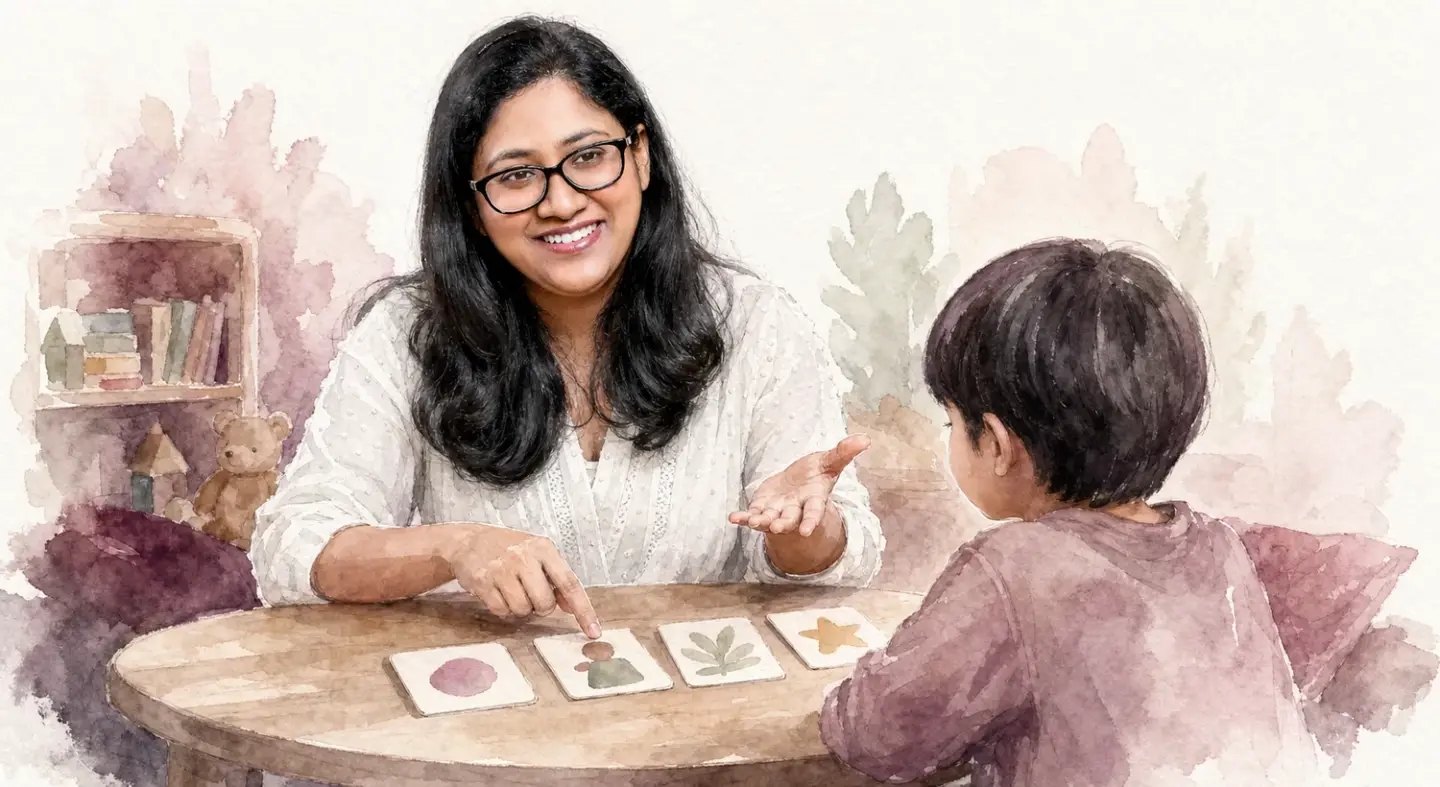
Watercolor scene of a therapist supporting a child during a communication activity

Speech and language therapy

Every voice deserves to be heard.

Assessment and therapy for speech, language, reading, spelling, swallowing, and auditory processing, for children and adults.

Who this is for

  • Pronunciation difficulties linked to a structural difference or an operation (cleft palate, tracheotomy)
  • Voice disorder (aphonia, dysphonia, nodules or cysts on the vocal cords, before or after surgery)
  • Speech and language difficulties in bilingual and multilingual children
  • Aphasia (difficulty understanding or using language after a stroke or brain injury)
  • Dyslexia and dysgraphia
  • Learning delay or difficulties in reading, writing, and spelling
  • Reading and writing difficulties for people with brain injury
  • Understanding the language of math: word problems, math vocabulary, and instructions

What speech and language therapy feels like

Try the tools we use every day.

Speech and language therapy is not repeating words at a table. It is a set of precise tools, chosen for one child, that make sounds hearable, words sayable, and meaning reachable.

Five of them are below. Use them yourself — that is the fastest way to understand what a session is for.

Listening before reading

Reading starts in the ear.

Before letters mean anything, a child has to hear that words come in beats, and that a beat comes in sounds. This is phonological awareness, and it is where a lot of reading difficulty begins — long before anyone calls it dyslexia.

We build it the way children learn anything: clapping, tapping, and stretching real words until the parts are obvious.

Tap the beats, then tap the sounds.

Tap each beat of the word

0 of 3 beats

Now tap each sound

0 of 3 sounds

Speech sounds

One sound at a time.

When a child says “tea” for “key” or “sip” for “ship,” the two words can sound the same to a listener, and sometimes to the child too. Speech sound therapy works through each sound step by step — first hearing the difference, then feeling where the sound is made, then using it in words, sentences, and, finally, conversation.

Each step builds on the one before.

Tap a pair to see the one sound that changes

Words — augmentative and alternative communication

A way to be understood, now.

For a child who cannot yet speak, or cannot be understood, a board or a device gives them a voice now, alongside the work on speech, for as long as they need it. Most of what any of us say is made of a few hundred core words — I, you, want, more, stop, help — so that is what a board leads with.

Build a message on the board below. Notice how far twelve words go.

The colors follow a common convention: words of the same type share a color, which helps a child find them quickly.

Tap words to build a message

  • People: I, you
  • Actions: want, go, help, play, eat, drink, like

Try: I want more · go play · stop, finished

Fluency

Rhythm gives speech somewhere to land.

A child who stutters is not nervous, careless, or unsure of what they want to say. Fluency work gives them tools — a slower rate, an easier start to a word, one word per beat — and, just as importantly, works with the family and school so that listening changes too.

A pacing board is one of those tools: one tap per word.

Tap one dot for each word: I — want — the — red — ball

Understanding

The difference between lost and understood.

Many children hear every word and still lose the meaning: the instruction was too long, the key words were buried, and there was nothing to look at. Visual supports, chunking, and simpler language are how we make meaning reachable — in the clinic, and then in the classroom.

Here is a typical morning instruction, and then the same instruction the way we would show it.

Some reading supports, such as larger text, text spacing, and a reading ruler, can be switched on for this whole website: open Accessibility at the top of the page.

Before we go to school this morning you need to finish your breakfast, put your plate in the sink, brush your teeth, get your shoes and your bag from the hallway, and wait by the front door.

Open Accessibility options

In detail

What speech and language therapy is

Pulse provides speech therapy for children and adults with developmental, psychiatric, and other conditions that affect speech. Our team of qualified therapists works collaboratively around each person’s communication goals.

A speech and language therapist assesses and provides remediation for disorders and difficulties linked with speech, pronunciation, language, reading, spelling, swallowing, and auditory processing. Speech and language therapists draw on anatomy, psychology, neurology, education, and linguistics, which allows them to cover a range of difficulties.

What happens next

Call the center and the team will talk you through assessment and next steps.

The team behind this service

The people your family will meet. Everyone works under the center’s clinical leads and shares one plan for your child.

  • Portrait of Blessing Donna Jacob
    Blessing Donna Jacob Speech and Language Therapist Master’s degree in Speech-Language Pathology · Certified in the SCERTS model · Hanen certified · Lidcombe Program for Early Stuttering · Makaton — Foundation Stage
  • Portrait of Jannzil Klein Carub
    Jannzil Klein Carub Speech and Language Therapist Bachelor’s degree in Speech Pathology · PROMPT Technique Level 1
  • Anagha Kuttappan Speech and Language Therapist

WhatsApp is for arranging a conversation — please don’t send medical details or your child’s information there.